I · 1662–1672 Record
The Salagama Peelers of Serendib
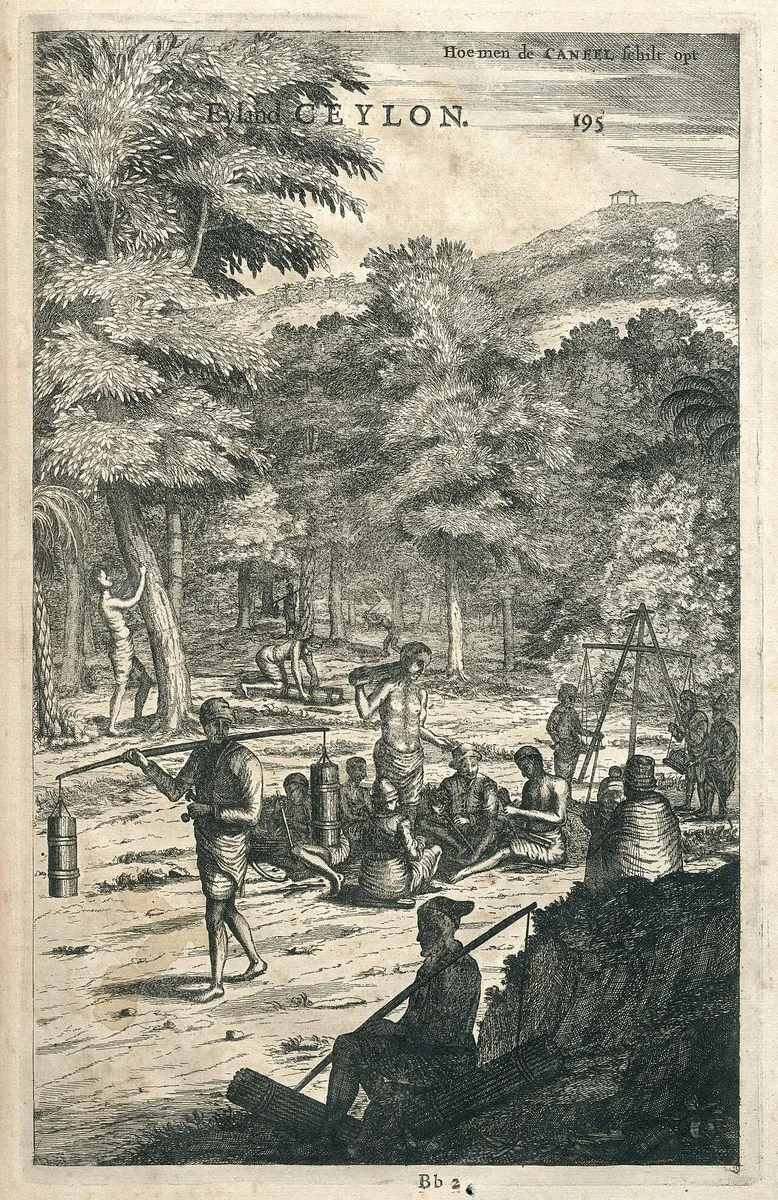
Philippus Baldaeus engraving (“Hoe men de Caneel schilt opt Eyland Ceylon”), documenting Sri Lankan cinnamon harvesters stripping inner bark in coastal groves.
Monograph 04 · Origin, Labour & the Quill
The history of Ceylon cinnamon is a record of concealed island origin, maritime empire, obligatory labour, and extraordinary Sri Lankan handcraft. Giving credit where it belongs makes every modern quill mean more.
Philippus Baldaeus engraving (“Hoe men de Caneel schilt opt Eyland Ceylon”), documenting Sri Lankan cinnamon harvesters stripping inner bark in coastal groves.
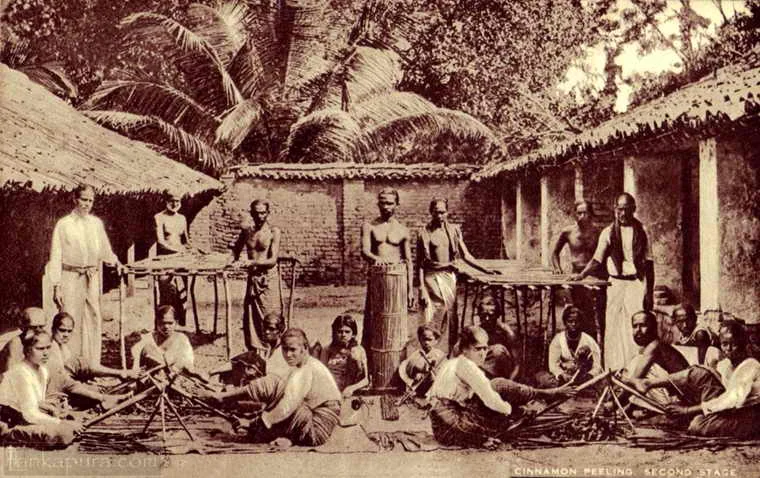
Seated at low wooden tripods after the monsoon rains, peelers rub each shoot with a brass rod to loosen sap before lifting unbroken ribbons of pale inner bark.
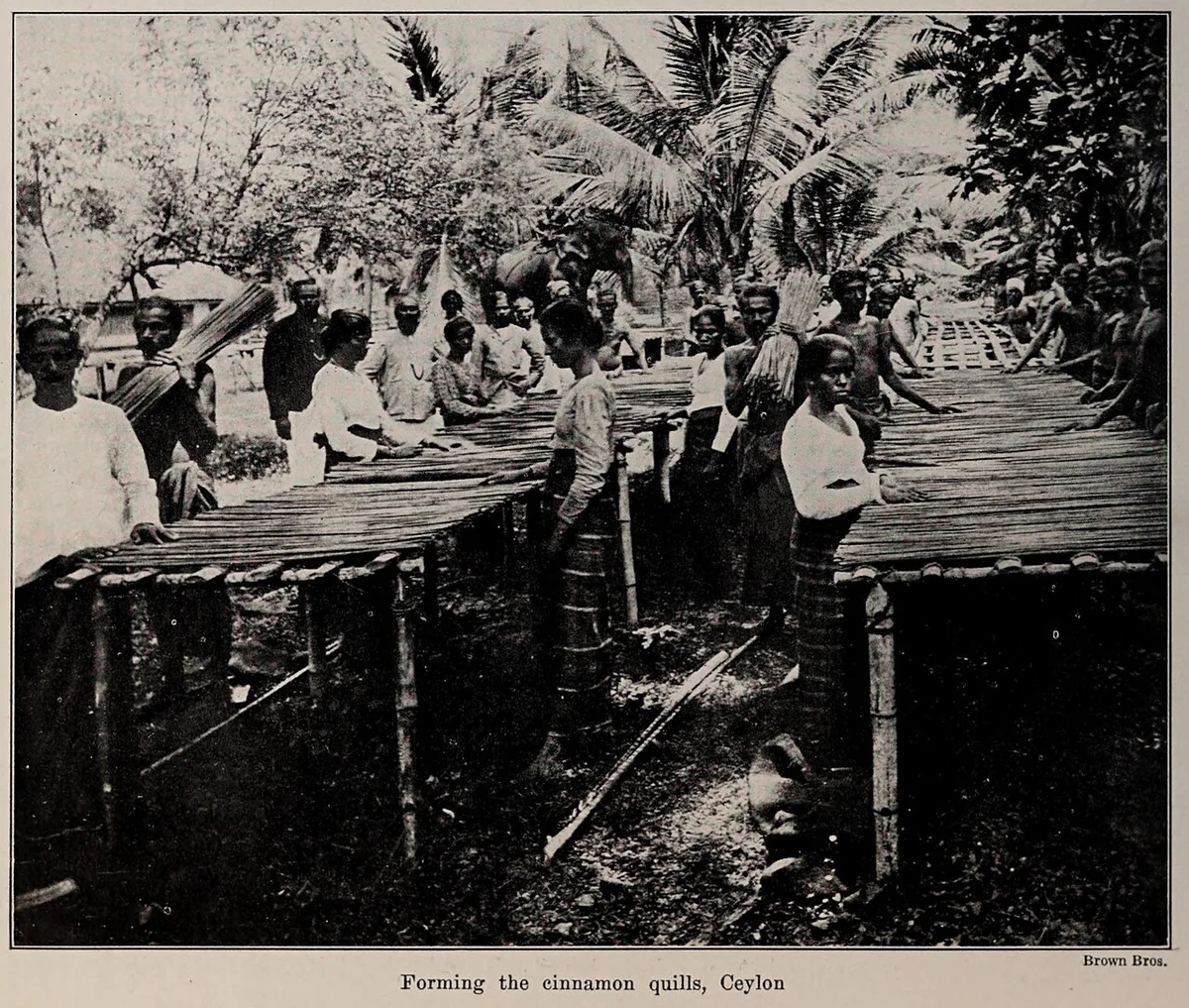
Thin sheets of inner bark are nested together into 42-inch quills on woven drying racks, an old island method built so fragile bark could cross oceans intact.
Six Eras
I · Classical Antiquity
Ancient Mediterranean and Near Eastern texts prized aromatics translated as ‘cinnamon’ and ‘cassia,’ yet early writers rarely knew the botanical species or island source. Cultural antiquity explains fascination, not modern species proof.
II · 10th–13th Century
Medieval Indian Ocean accounts, including Buzurg ibn Shahriyar’s Aja’ib al-Hind and thirteenth-century geographical writings, increasingly link fine cinnamon directly to Sri Lanka (Serendib / Ceylon).
III · 16th Century
Portuguese forces reorganized coastal Sri Lankan cinnamon tribute into an enforced maritime monopoly. Value was created entirely on the island by skilled harvesters and peelers while export profit was claimed abroad.
IV · 1658–1796
Under the Dutch East India Company, hereditary Salagama peeling skill was bound into obligatory corvée quotas. Archival records preserve repeated petitions and eighteenth-century revolts by peelers resisting coercion.
V · 1796–1948
British administration shifted trade from wild forest tribute toward cultivated coastal cinnamon gardens from Negombo to Galle and Matara, yet no mechanical tool ever replaced hand-peeling and quill telescoping.
VI · Contemporary Sri Lanka
Today ‘Ceylon Cinnamon’ holds protected geographical-indication recognition, and Sri Lanka’s official grading separates slender Alba (≤ 6 mm) and Continental C5 from coarser bark.
Primary & Archival References
Experience hand-rolled Sri Lankan Alba (≤ 6 mm) and C5 quills at your own table.